


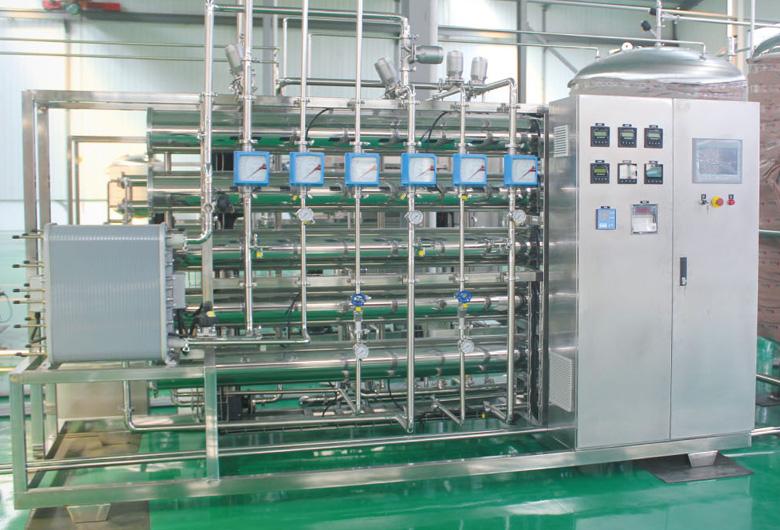
GMP Pharmaceutical Purification Water Equipment
Contact Info
- Add:No. 318 Zhenxing Road, Che Dun Town, Dan Lai Shang Chuang Yuan, Building D, Zip:
- Contact: 胡先生
- Tel:18721141386
- Email:411243788@qq.com
Other Products


GMP Pharmaceutical Purified Water Equipment: The Core System Ensuring Drug Production Quality
In the pharmaceutical manufacturing sector, purified water is an indispensable key raw material in the drug production process. Whether for the production of injections, oral liquids, or the cleaning of biological preparations and medical devices, purified water that meets the standards of the Chinese Pharmacopoeia and GMP (Good Manufacturing Practice) is required. As the pharmaceutical industry's requirements for quality control continue to rise, GMP pharmaceutical purified water equipment has become one of the core production systems for pharmaceutical companies. This article will comprehensively analyze the key technologies and equipment in this field from five dimensions: equipment principles, technical advantages, selection points, application scenarios, and maintenance management.
Chapter 1: The Importance and Industry Standards of GMP Pharmaceutical Purified Water Equipment
1.1 The Core Role of Purified Water in Pharmaceutical Production
Pharmaceutical purified water must meet stringent indicators such as conductivity ≤1.3 μS/cm (25°C) and microbial limit <10 CFU/ml. It is directly involved in drug formulation, equipment cleaning, experimental analysis, and other processes. Failure to meet water quality standards may lead to:
- Inactivation of active drug ingredients
- Microbial contamination causing batch rejection
- Equipment scaling shortening service life
1.2 Mandatory Requirements for Purified Water Systems Under GMP Certification
According to the "Good Manufacturing Practice for Pharmaceutical Products (2010 Revision)," pharmaceutical companies must establish a full-process water quality monitoring system from preparation and storage to distribution. Equipment must possess the following characteristics:
- Verifiability: Supports IQ (Installation Qualification), OQ (Operational Qualification), and PQ (Performance Qualification) validation
- Traceability: Real-time recording of key parameters such as water temperature, conductivity, and flow rate
- Contamination Prevention Design: Circulation pipelines use 316L stainless steel material with a slope >1% to prevent water accumulation
1.3 Comparison of Main Industry Standards
| Standard Name | Key Indicator Comparison |
|---|---|
| Chinese Pharmacopoeia (2020) | Conductivity ≤1.3 μS/cm (25°C) |
| USP<645> | TOC ≤500 ppb, endotoxins <0.25 EU/ml |
| GMP Appendix | Circulation flow velocity >1.5 m/s to prevent biofilm |
Chapter 2: Analysis of Core Technologies in GMP Purified Water Equipment
2.1 Multi-Stage Filtration Process Combination
Modern GMP purified water equipment commonly adopts a four-stage process: "pretreatment + reverse osmosis (RO) + electrodeionization (EDI) + distillation":
- Pretreatment Unit: Quartz sand filters remove suspended solids, activated carbon adsorbs residual chlorine
- Reverse Osmosis Membrane: Desalination rate >98%, intercepts organic matter with molecular weight >100 Da
- EDI Module: No acid-base regeneration required, produced water resistivity can reach 15-18 MΩ·cm
- Multi-Effect Distiller: Completely removes pyrogens through vapor-liquid separation
2.2 Breakthroughs in Reverse Osmosis (RO) Technology
Utilizes anti-fouling composite membranes, reducing operating pressure from traditional 3.5 MPa to 1.5 MPa, cutting energy consumption by 40%. Equipped with online flushing function, automatically initiates chemical cleaning when membrane flux decreases by 10%, extending membrane life to over 3 years.
2.3 Advantages of Electrodeionization (EDI) Technology
Compared to traditional mixed-bed ion exchange, EDI technology offers:
- Zero acid-base consumption, reducing hazardous waste treatment costs
- Continuous water production without shutdown for regeneration
- Stable water quality (resistivity fluctuation <±0.1 MΩ·cm)
2.4 Key Technologies for Microbial Control
- Pasteurization: 80°C hot water circulation for 30 minutes to kill microorganisms in pipelines
- Ozone Sterilization: 0.1-0.2 ppm ozone concentration maintains system sterility
- UV Sterilization: 254 nm ultraviolet light destroys microbial DNA structure
Chapter 3: Detailed Explanation of Typical Equipment Components and Functions
3.1 Pretreatment System
- Multi-Media Filter: Composed of quartz sand and anthracite in a 5-layer filter bed, with a retention accuracy of 5 μm
- Softener: Sodium ion exchange resin reduces hardness to <0.03 mmol/L
- Precision Filter: 5 μm polypropylene filter cartridge serves as a protective barrier for the RO system
3.2 Reverse Osmosis Main Unit
- High-Pressure Pump: Vertical multistage centrifugal pump with frequency conversion control, pressure fluctuation <±5%
- Membrane Module: 8040 spiral-wound membrane, single membrane area of 400 ft²
- Energy Recovery: Utilizes concentrated water pressure to drive a turbine, saving 25% energy
3.3 EDI Module Structure
Utilizes a plate-and-frame design, with conductive resin filled between each pair of membranes. Under a DC electric field, ions migrate directionally to the concentrated water chamber, producing water purity of up to 18.2 MΩ·cm in the freshwater chamber. Modular design supports N+1 redundant configuration.
3.4 Storage and Distribution System
- Storage Tank: 316L stainless steel material, equipped with 0.2 μm hydrophobic PTFE filter cartridge
- Circulation Pump: Double mechanical seal structure, leakage <3 drops/minute
- Pipeline Design | Three-dimensional slope inspection ensures no dead ends
Chapter 4: Equipment Selection and Daily Maintenance Guide
4.1 Key Parameter Calculation for Selection
- Water Production Demand: Based on maximum water point flow rate × 1.2 safety factor
Example: A lyophilized powder injection workshop requires 5 m³/h, so select 6 m³/h equipment - Water Quality Requirements: Biopharmaceutical companies need to add a distillation unit to control endotoxins
- Energy Consumption Comparison: RO+EDI solution saves 30% water compared to traditional processes
4.2 Installation Environment Requirements
| Item | Standard Value |
|---|---|
| Ambient Temperature | 5-40°C |
| Relative Humidity | <80% |
| Power Fluctuation | Voltage ±10%, frequency ±2% |
4.3 Daily Maintenance Points
- Daily Inspection: Record pressure gauge and conductivity meter readings, calibrate if error >10%
- Monthly Maintenance: Clean quartz sand filter, backwash flow rate controlled at 12-15 L/s·m²
- Annual Maintenance: Replace RO membrane front seal ring, test EDI module resistance value
4.4 Common Fault Handling Solutions
- Decreased Water Production: Check safety filter, replace filter cartridge when pressure difference >0.1 MPa
- Increased Conductivity: Raise EDI module voltage to 200-400 V DC
- Microbial Exceedance: Initiate 80°C hot water circulation and sample for testing
Chapter 5: Industry Application Cases and Future Trends
5.1 Typical Application Scenarios
- Large Infusion Production Plants: Use dual RO + dual EDI configuration to ensure continuous water supply
- Biopharmaceutical Workshops: Add 0.1 μm sterilizing filters in the distribution loop
- Medical Device Cleaning: Dual system design with purified water + water for injection
5.2 Customer Case: A Listed Pharmaceutical Company's Renovation Project
- Original System Issues: Purified water tested positive for microorganisms multiple times, leading to GMP inspection failure
- Renovation Plan:
- Added ozone generator to inhibit biofilm
- Replaced with double mechanical seal circulation pump
- Installed online TOC monitor (detection limit 0.5 ppb)
- Renovation Results: 100% water quality compliance for 12 consecutive months, energy consumption reduced by 22%
5.3 Future Technology Development Trends
- Intelligent Monitoring: Integration with PLC and MES systems for predictive analysis
- Green Energy Saving: Promotion of thermal vapor compression distillation technology, reducing energy consumption by 60% compared to traditional methods
- Modular Design: Integration of pretreatment, RO, and EDI into containerized equipment rooms
Conclusion
As the lifeline of pharmaceutical quality, the technical selection and operational management of GMP pharmaceutical purified water equipment directly impact a company's compliance and economic benefits. With the implementation of the new 2023 "Pharmaceutical Machinery Industry Standards," it is recommended that pharmaceutical companies focus on suppliers' GMP compliance design capabilities, validation document completeness, and localized service networks when procuring equipment. Through scientific system design and strict daily management, the purified water system can operate stably over the long term, ensuring drug safety.
| Industry Category | Others |
|---|---|
| Product Category | |
| Brand: | 奥力原 |
| Spec: | ALY-CHS-1T |
| Stock: | 99 |
| Manufacturer: | 上海奥力原环境科技有限公司 |
| Origin: | 113117 |


